• Skip to main content

The Seabourns

  • Home
  • Blog
  • About Us
  • About God
  • Give

ccc

Permission to Innovate

November 19, 2010 by Keith Seabourn Leave a Comment

This blog post first appeared as a guest post on the Campus Crusade for Christ Blogference. If you’ve not been there yet, you are missing some good materials. Get on over there!

Innovation takes many forms. It may look like a new use for an old tool; a new tool for an old need, or more commonly, a new tool for a new need.

Christian Maureira, the national director for Campus Crusade for Christ in Chile, innovated. He saw a creative opportunity to engage 33 miners with the reality of Jesus Christ. He took a common tool (the Jesus film in audio) and innovated a strategy to reach them 2660 feet below ground. And we all applauded his creativity, his courage, and his innovation.

Global Media Outreach innovated. In the era of sophisticated websites, they saw an opportunity. Their “simple sites” are basically the Four Spiritual Laws and are designed for those the Spirit has brought almost to the point of decision. The saw an opportunity for those around -1 on the Engel scale, who simply needed to know how to ask Jesus into their lives.

Agape Europe innovated. In their spiritual environment, they understood that there are many steps from those who are far from God. To move seekers from -10 on the Engel scale to the point of a decision for Christ, takes multiple steps. So they devised the stepping stone strategy. They develop web experiences as a series of steps moving people closer to God. They connect people with mentor coaches to help them along the way. They looked at the process of discovering God, and met people at critical points along the way with insightful experiences and trustworthy people.

Brian Barela innovated. This blogference is a creative way to engage hundreds of people around critical topics focused on reaching and discipling people today. Creatively. Innovatively. Faithfully.

What a time to be alive! What a time to be engaged as Christ’s ambassadors. We can connect with people in ways that Paul, Barnabas, Peter and others could only imagine. We are only bound by our imagination of what God could do through our availability.

God needs each of us to engage with all the creativity He gives. Our organization needs each of us to engage full of faith, growing our collective ability to fulfill God’s calling, employing every approach we can imagine to be fruitful. Our organization needs us to share what we’re learning, both what is working and what is not working. We also need people who have mastered the basics. People who can make a clear presentation of the gospel at the drop of a hat. People who understand the basic elements of how people grow as disciples of Jesus Christ.

At the recent Catalyst conference, Seth Godin said, “Change is made by people who eagerly accept responsibility without expecting authority.” Personally, I have rarely felt held back from innovating in my staff career. Innovation has been a hallmark of my time with Campus Crusade for Christ. While I am responsible for what I have done, I have always had freedom to try.

What about you? Are you eager for responsibility? What are you going to do before the end of this year that you have never done before?

Filed Under: ccc, gto, Leadership Tagged With: innovation, Leadership

Leading with Information

November 1, 2010 by Keith Seabourn 2 Comments

It’s not how many worms the bird feeds its young, but how well the fledgling flies. (United Way of America, 2002)

We are engaging in a significant initiative in what we call leading with information. LwI is an intentional plan to add objective, outcome-based measures to our use of anecdotal, life stories in measuring effectiveness in accomplishing our mission.

It is helpful to understand four types of measures:

  • Inputs: Resources dedicated to or consumed by the organization
  • Activities: What the organization does with inputs to fulfill its mission
  • Outputs: The direct products of organization activities
  • Outcomes: The differences the organization makes

It is easiest to measure inputs: how many staff are on the field, funds raised. Activities are things the staff do each day: gospel presentations, bible studies led. Outputs are things like: exposures to the gospel, indicated decisions. Outcomes are the most difficult to quantify: changed lives, behavioral changes.

Since outcomes are the most difficult to measure but are the most important measures of mission success, it is important to identify and quantify the key drivers of each outcome. But to identify the key drivers, it is important to understand the end-to-end process flow and the critical points in the process.

Changed lives are the result of God’s direct intervention. Most of the time, God chooses to work through his people. God does not share his glory with anyone, but he does invite us into his processes in the lives of others. We do have a part.

We are working through these issues. We are seeking God’s wisdom to measure our part with excellence so that we can improve.

[NOTE: Click here to read my notes from several articles and papers I’ve read.]

Filed Under: ccc, gto, Leadership Tagged With: Leadership, measurements

Continuous services through connected devices

October 28, 2010 by Keith Seabourn Leave a Comment

Ray OzzieRay Ozzie has been a long-time pioneer in the computer world. He invented Lotus Notes, a collaboration environment from the 1990s. He invented Groove, then joined Microsoft as their chief architect.
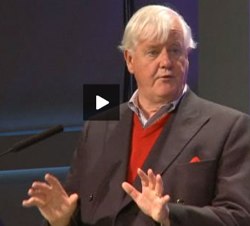
He recently wrote a lengthy yet interesting memo as part of his stepping down as chief architect at MS. His article is here.

His key vision of the future: a post-PC world based on a combination of Continuous Services and Connected Devices.

Some excerpts:

Continuous services are websites and cloud-based agents that we can rely on for more and more of what we do. They’re always-available… They’re constantly assimilating & analyzing data from both our real and online worlds. They’re constantly being refined & improved based on what works, and what doesn’t.

Connected devices beyond the PC will increasingly come in a breathtaking number of shapes and sizes, tuned for a broad variety of communications, creation & consumption tasks. Each individual will interact with a fairly good number of these connected devices on a daily basis – their phone / internet companion; their car; a shared public display in the conference room, living room, or hallway wall.

It’s an exciting time to be alive, to be a follower of Jesus Christ, and to have the privilege of helping lead in the technology-enhanced mission to help everyone know someone who truly follows Jesus.

Filed Under: ccc, gto, Leadership, Thoughts Tagged With: Leadership

Os Guiness on Globalization at Lausanne Congress

October 27, 2010 by Keith Seabourn Leave a Comment

Os GuinessI recommend to you Os Guiness’ presentation on globalization at the Lausanne Congress. It’s 15 minutes long. You can skip to the 2 minute point to get past the introductions.

Additional panel speakers are listed on the bottom right of the page in “Join related conversations”.

Some notes from my listening:

His understanding: Globalization is the process through which our human interconnectedness has now reached truly global proportions.

The deepest driver in globalization is information technology. Particularly the 3 “S” forces:
Speed: Communicate at instantaneous speed
Scope: Communicate with the entire world
Simultaneity: Communicate everywhere at the same time

What is happening in the global revolution, centered in information technology, has been described as significant as the rise of the wheel, the invention of the alphabet or human writing. Something that is transforming human experience at all sorts of levels from identity, to families, to work, to communities, to nations, to notions such as evil to religions and even for the sense of the [future] prospect of the human race.

Globalization is the single strongest face of the world in our time. We will wrestle with it throughout our lifetimes as the context for our living and witnessing.

Filed Under: ccc, gto, Leadership, Ministry

How do you Brand God?

October 24, 2010 by Keith Seabourn 3 Comments

“How do you brand God?”, she asked. Janell is a marketing professor. She explained that she and a colleague have been exploring that question.

We were just beginning our take-off roll in Detroit on my flight home from Nairobi, Kenya. We had done the usual “What do you do?” and my explanation that I am a missionary helping people consider what it might be like to know God prompted her branding question.

I must admit that I’ve never begun a conversation about the gospel in quite this fashion.

I asked her how she felt God should be branded. She suggested several ideas about crucifixes and other things.

I suggested that she might explore how God wants to be branded. God says that his brand is seen in his people. His brand is the transformed lives of those who truly follow him. Lives of peace, lives of joy, lives of purpose, lives of self-sacrifice for others.

God says “by their fruits you shall know them.” He says, “By this all men will know that you are my followers, if you love one another.”

Janell is very curious. It was a very engaging conversation. She asked very good questions. The airplane was still taking off and climbing. “I need to get a pen and paper. I want to write these ideas down.”, she said. As soon as we reach 10,000 feet and we were released from seatbelts, she grabbed pen and paper from the overhead bin and we continued.

“If this is how God is branded, how does your organization engage with this brand?”

I explained our vision statement, “Building movements of true followers everywhere so that everyone knows someone who truly follows Jesus.” Wanting to keep the conversation personal rather than purely academic, I continued, “That is why we are having this conversation. You are talking to someone who truly follows Jesus. So this conversation is living out God’s brand. I’m helping you understand what it might be like to know God personally.”

“What is your organizational process to engage this branding?”

I explained the seven basic measurements that we use to evaluate our progress. Although this is typically “insider information”, it seemed appropriate to include in our conversation. She wrote notes as I briefly explained:

  • Exposures to the gospel
  • Indicated decisions to accept the gospel (which Janell called “behavioral intention”)
  • Membership in a growth group to grow in understanding
  • Membership in a movement group to engage in helping others understand
  • Mobilizing and leading a group
  • The 6th and 7th are similar measures external to the organization or internal to the organization: Committing to a lifetime of engaging in helping everyone know someone who truly follows Jesus. Sometimes by joining the staff of the organization. Most frequently by living as a true follower of Jesus in the business or professional workplace.

“This sounds like Amway.”

I was amazed that she made the connection. I responded, “DeVos was a follower of Jesus. He took this discipleship and multiplication process which has been used around the world for two thousand years, and incorporated it into a business model. He saw a good model and built a business on it.”

“So, how does someone become a member? What are your membership requirements?”

We were looking at her notes of these 7 measurements. “The first two measures include the gospel. Gospel is an older English word for “good news”. As people understand how God loves them and what he has done for them, it is good news. So perhaps the best way to help you understand the membership process is to briefly list the key points of the gospel. There are four of them.”

So right there in our aluminum tube at 35,000 feet, she took notes about the “membership process”:

  • God loves you and has a purpose in life for you that is full of joy and fulfillment and meaning.
  • We cannot experience God’s love and purpose because we have sinned, and we are separated from God. (This led into quite a discussion about “original sin” and are babies evil.)
  • Jesus Christ is God’s way of overcoming this separation. It is borne out of his nature and his love. (This led to a fascinating conversation about “exclusivity claims” among religions.)
  • Each of us must personally accept God’s invitation to engage with him through Jesus’ substitution to overcome our sin and hence our separation.

There were many other threads to this conversation.

“Hasn’t science moved us beyond much need for a spiritual explanation for everything?”

I used our current situation: If airplanes had existed in the past, perhaps people would have explained flight as “angels get underneath the wings and lift them up.” But we know that modern flight is based on principles of science. Differences in pressure create lift on the wings. Heating causes gases to expand in the engines. Newton tells us that for every action, there is an equal and opposite reaction. Lift and propulsion move the airplane up and forward.

But my question is: Who created these scientific laws? How did they come into existence so that we could discover them and employ them to travel from Detroit to Orlando? They appear to be the product of some intelligence which designed them to work in productive ways for our benefit.

“I think I’m more of a Stephen Hawking type when understanding science.”

I told her of Dr. Fritz Schaefer, nominated 5 times for the Nobel prize. Dr Schaefer explained his perspective on science in a U.S. News and World Report article in 1991, “The significance and joy in my science comes in the occasional moments of discovering something new and saying to myself, ‘So that’s how God did it!’ My goal is to understand a little corner of God’s plan.” Dr. Schaefer has lectured on “Stephen Hawking, the Big Bang, and God.”

Janell shared more of her spiritual background. I sense that she knows about God, but more in the Stephen Hawking agnostic or deist approach. And God wants her to know him personally, as the forgiver of sins through Jesus and as the source of fulfillment and joy and purpose in life.

We exchanged business cards. I emailed two websites and she has responded thanking me for the conversation and the websites:

  • EveryStudent.com. A safe place to ask questions about life and what it might be like to know God.
  • Stephen Hawking, the Big Bang, and God, a lecture by Dr. Fritz Schaefer.

It was a fascinating conversation. God’s Spirit gave words to say and thoughts to share. I would never have imagined how a conversation on branding God could lead to an explanation of the gospel and ongoing exchange of emails.

Filed Under: ccc, Ministry, Stories Tagged With: evangelism

  • « Go to Previous Page
  • Page 1
  • Interim pages omitted …
  • Page 10
  • Page 11
  • Page 12
  • Page 13
  • Page 14
  • Interim pages omitted …
  • Page 25
  • Go to Next Page »

Copyright © 2026 · Parallax Pro on Genesis Framework · WordPress · Log in